Table of Contents
WHAT IS PAYMENT ON DELIVERY?
Payment on delivery is a payment option that involves customers paying for goods purchased online when the order arrives at their location. They have seen it and confirmed that it is what they ordered before making the payment for what they ordered. It is a very popular payment model in a country like Nigeria. It was created so by one of the pioneering retail outlets in the country, Jumia.
However, this system of transactions exists in communities around Africa and other places around the world. It was not described or named the payment on delivery option. It was just a transaction based on agreement to receive cash when the item get to the home or hands of the buyer.
WHY DOES PAYMENT ON DELIVERY EXIST?
There are a multitude of reasons why the payment-on-delivery option exists. These reasons are genuine, as they are the necessities that led to the invention of the payment option.
Here they are:
Cash Payment
Before the advancement of digital payments, people made payments via cash. In places like Nigeria, the early stages of digital transfers were very ineffective, and thus, businesses and customers could rely on money transfers as payment options and would rather receive cash in hand.
Most times, electronic cash transfers would fail. Then, the option of payment with paper money was the solution to resolve the issue. Situations like these are one of the reasons we now have the payment of delivery retail business model.
Inadequacies of Digital Money Transfer
We now have USSD and Bank apps. We have more than that now. We have receipt-printing bank apps that have solved the problem of proof of payment. Back when the tech side of banking was in its peripheral stage, there were issues of failed transactions and a lack of evidence of payment. These inadequacies resulted in the payment on-delivery option because it brought about trust issues between customers and businesses.
Dealing with banks, customers or businesses in the wake of incomplete transactions, failed transactions, multiple debits and debits without credit was a daunting experience. It took time and might require a long process or visits to the bank just to resolve it.
Having cash to pay for the order on receiving the item became the best way to avoid complications.
The Newness of the Online Retail Model
The internet and the online retail ecosystem are still new to many people. Gen Z’s have a better knowledge of how things work in online retail stores. They also have more trust in the system than the millennials. Though millennials are catching up to the use of tech and online shopping as fast as they can, there is still a deficit in the population of the older generation who are tech-savvy and fully trust the online shopping space.
Scam Prevention

The fear of scammers is the beginning of wisdom. There are legit and scam businesses, the way that we have legit and scam customers. Payment on delivery is a sensible alternative to averting incidences of fraudulent encounters.
The payment is made when the order is completed, and the item is delivered. If the order is made and the item does not get to the customer, there is no need to panic. Nothing has really been lost on the customer’s side because he has not made the payment.
The business is responsible for covering all costs accrued in the process of processing and delivering the order. The business owner bears the risk if anything happens before the item reaches the customer.
Trust
This payment model is built on trust. Yes, it is! The only trick to this trust situation is that the trust is one-sided. Equal trust should have been the best-case scenario, but it is not. The seller has to trust that the customer decides to place the order and is willing and capable of making the payment without hesitation when the package gets delivered.
The sellers put in so much effort by providing the product and processing the order, covering delivery fees and all costs. At the same time, the customers offer word of mouth and click the button that says they agree to pay and receive the package on delivery.
WHO BENEFITS FROM PAYMENT ON DELIVERY
The customer enjoys a higher level of benefit from this method of doing business because the bare little to no risk in the course, making the order down to delivery. The fact that they are risking nothing from the initiation of the order up until delivery is a great benefit.
Since payment is not initiated until the customer receives the item, they do not have to worry about scams from payment and products because they get to see what the order is and, in certain cases, check and test it before paying for it.
THE RISK INVOLVED IN PAYMENT ON DELIVERY

Failed Delivery
The reasons for failed delivery may range from order processing issues to delivery issues. Sometimes, these are the result of situations beyond human control. Here are a few:
- Vehicles can break down and cause delays in delivery.
- At times, the logistic company handling the delivery might mix up the product or misdirect the product
- The attitude of the delivery agent can cause the customer to reject the item
- The package might be damaged in transit
- The wrong order might be sent out or delivered
Delayed Payment
Many times, I have had to deal with delayed payment issues. Some of these instances were due to network problems; other times, it was due to banking issues. I have also experienced scammers who used delayed payment to cart away items delivered. Some succeeded, but now I have learned from my mistakes and can no longer be caught in that situation.
Delaying the Delivery Agent
Delivery agents set out on their job for the day and try to cover as many miles and deliver to as many customers as possible. It is not very nice to work when they have to wait for customers to inspect or test the product before payment. Some customers can delay the delivery agents so much that it becomes an argument.
Product Rejection
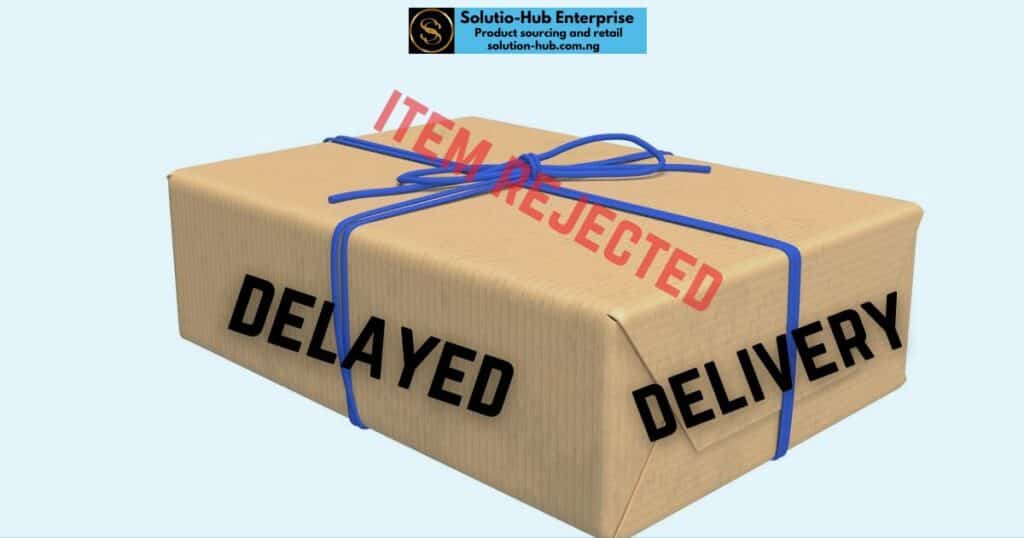
Rejection of a product can be for the following reasons:
- Low-quality product
- the product did not meet the customer’s expectations on arrival
- An order made with no intent to buy
- customer is unavailable to receive the package
- The customer had no money to pay for the order
- Provision of wrong contact and delivery details
WHY SMALL BUSINESSES STILL OPERATE THE PAYMENT-ON-DELIVERY OPTION
Popularity
People tend to trust popular businesses over unpopular ones, which is a valid thing to do. Popular companies are big and can easily be identified or sued. Small businesses are always discreet and can seldom be easily identified.
There is normally more ease on the customer’s side when making payments to the big names than to the small names.
It leaves small businesses with the option of payment on delivery as it helps to bring about confidence and reduce the risk of scamming, which is common among small businesses.
As the case may be, the share size of the big companies or sellers says a lot about their capitalization. It gives customers a sense of trust and confidence in their ability to deliver. Notwithstanding that, they might sell low-quality products and provide below-par services. Some smaller businesses can do better, but what can I say since we judge by sight as humans?
Brand

Branding is an essential marketing tool. Lots of people are hooked on brands without knowing it. Most small businesses sell unbranded or unpopular brands. The products sold by small companies can be great, too, just as those sold by big businesses.
There are great brands out there, but not all are good brands. The same goes for small brands. To compete with the bigger brands, small-scale businesses like Solution-Hub Enterprise Nigeria have to maintain the culture of payment on delivery.
Trust
There is low trust for small-scale sellers in the online retail business space, whether on social media or any other medium. The low trust is mostly a result of the experiences from transacting with dubious businesses and scammers.
CONCLUSION
Good products are not a monopoly of big businesses. Small-scale businesses sell great products, too. Due to the inadequacies of consumer protection law and the poor enforcement of the available laws, Entrepreneurs/Innovators invented payment-on-delivery models. This solves most of the problems surrounding payments in areas with no data coverage and situations where other means of payment are not accepted or efficient for making payments.
Our Latest Post For You
- LOAN APPS IN NIGERIA: OUR OWN VERSION OF CREDIT CARDS – ARE THEY GOOD FOR BUSINESS OR NOT?

- THE NAIRA FOR NAIRA MENTALITY: WHY RAISING CAPITAL FOR BUSINESS IS HARD IN NIGERIA

- PAYMENT ON DELIVERY VS PAYMENT BEFORE DELIVERY: WHICH ONE IS BETTER?

- 7 Reasons Why Product Replacement is a Major Challenge for Nigerian Sellers

- THE BEST 10 WAYS YOU CAN BE A GOOD CUSTOMER