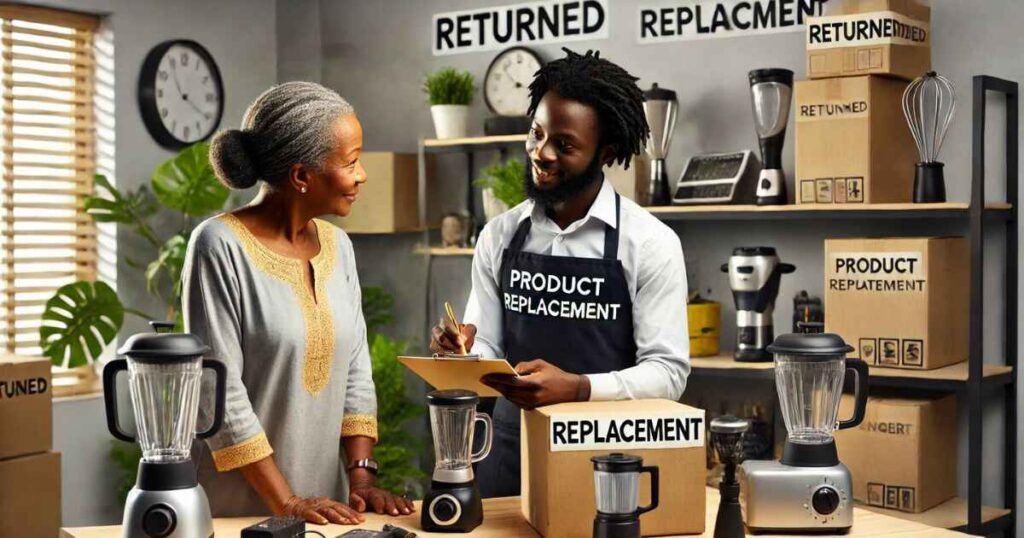
Product replacement is a critical issue that many Nigerian sellers face every day. Sellers are dealing with numerous challenges after the sale, and these challenges affect both their business and the customer experience. In this article, we are exploring 7 major reasons why product replacement becomes a tough challenge for Nigerian sellers. We are also including extra tips under bonus points to help improve the overall process.
Product replacement is an important part of customer service. When a product is faulty or not as described, the customer expects a replacement. However, many Nigerian sellers are finding it difficult to handle replacements. We are breaking down the key reasons behind these challenges. Understanding these reasons helps both sellers and customers work together for a better shopping experience.
Table of Contents
1. The Seller Does Not Own the Product
Many Nigerian sellers act as middlemen. They do not own the products they sell, which makes product replacement very challenging. If the seller is the original owner of the product, it is easier to deal with replacement issues.
- When a seller does not own the product, they have less control over the quality and replacement process. This can be avoided by reaching agreements with the importer or original product owners on there terms and condition of after sale occurrence.
- They rely on third-party suppliers or manufacturers to handle returns and replacements. Most times, there is backlash from the real product owner because the traditional mode of business operation when it comes to general product sales in Nigeria is not very friendly to replacement of returned items or refund.
- They source product from different stores in the market without proper agreement on how to handle returns.
There is a saying in Nigeria, and it goes, ‘Whatever has left the Igbo man’s hand or his shop is no longer new. This implies that any returned item is not the same as what was sold and might be treated as used or too old to compare to a new item. Therefore, it is not worth replacing
As a seller who produces or ships in their product, there is the authority to make important decisions such as replacing returned items. find out more about why you should Import Products Instead of Dropshipping from Other Importers.

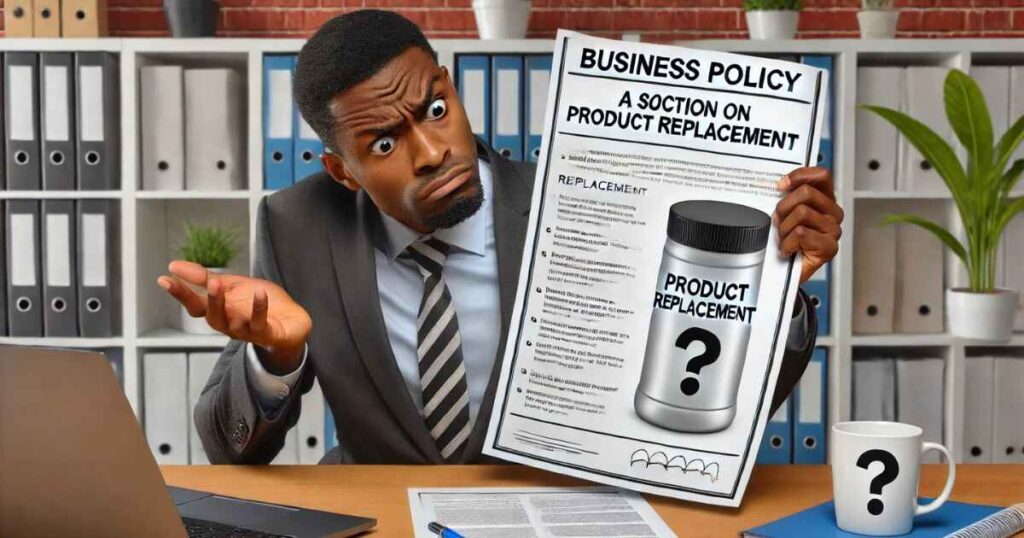
2. The Business Policy Does Not Include Product Replacements
A significant number of businesses do not have a clear policy on product replacements.
- Many sellers today operate with business policies that do not clearly cover product replacements. In many cases, the agreement is only based on word of mouth rather than written terms. A seller might casually say something like, “If anything goes wrong, just let me know.” While some sellers may genuinely honor this promise by replacing, refunding, or repairing the product, this is not always guaranteed.
- Customers expect a smooth replacement process, but if the business policy does not include it, issues arise.
It is like playing a game without knowing the rules. When the rules are not clear, everyone becomes confused and unhappy.
This absence of a clear replacement policy makes it hard for both sellers and customers to resolve issues efficiently.
3. The Duration for Product Replacement Is Exceeded
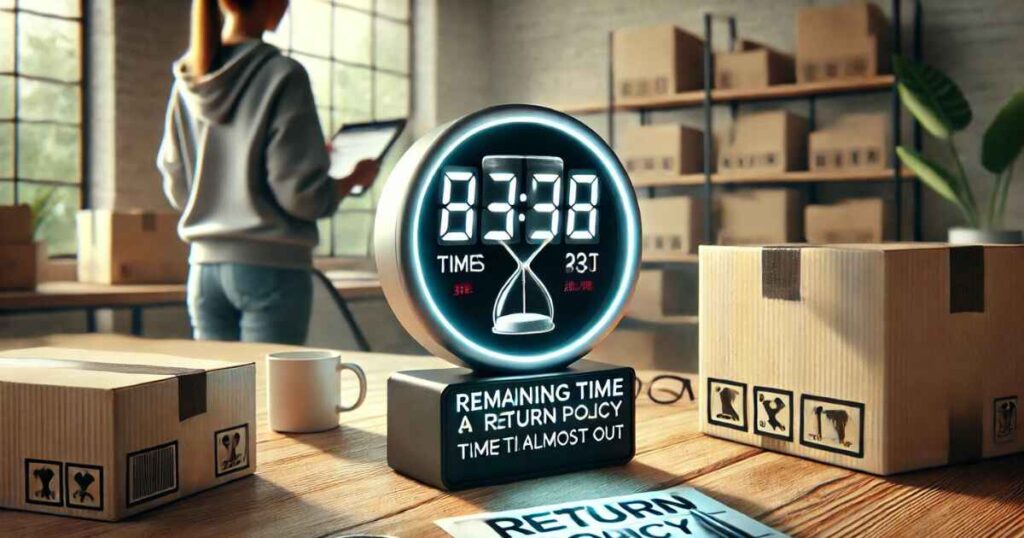
Time is of the essence when dealing with product replacements.
- Many sellers set a limited time frame during which replacements are allowed.
- If the duration for replacement is exceeded, customers cannot claim a replacement, even if the product is faulty.
It is like missing a bus because you did not arrive at the stop on time. If you miss the time window, you lose the chance to get a replacement. This time limit can frustrate customers and harm the seller’s reputation.
4. Refusal to Cover the Cost of Return by the Customer
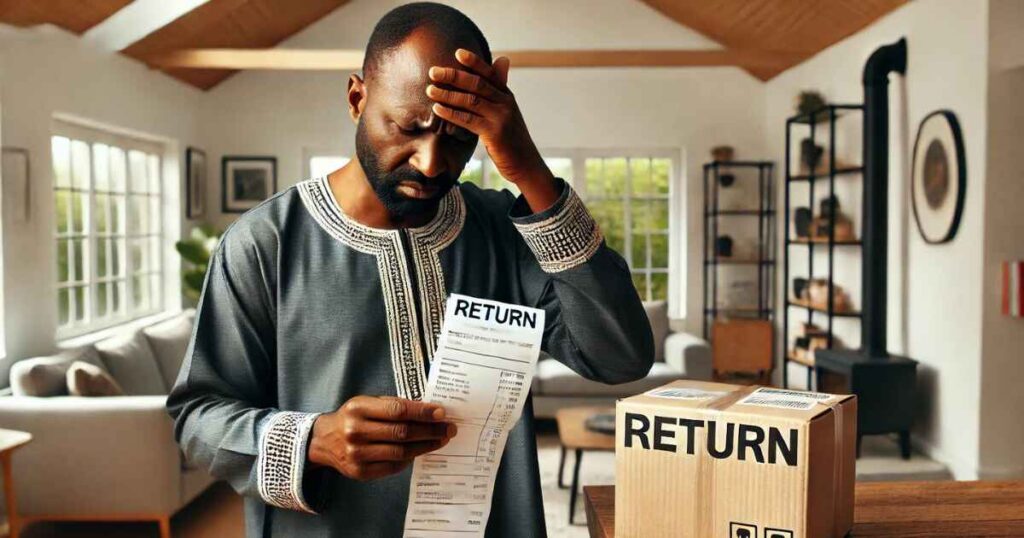
Returning a product often comes with extra costs. Many times, the seller does not want to carry this burden alone. In some cases, the seller covers the full cost of return, while in other situations, the buyer takes full responsibility. There are also cases where both parties agree to share the return cost to make it fair.
- Many sellers do not cover the cost of return shipping or handling fees, forcing customers to pay extra.
- This cost burden can discourage customers from returning faulty products, or it creates further disputes.
It is like asking someone to pay for the taxi ride when they are already having a bad day. The extra cost adds to the stress and frustration. When customers have to pay for returns, the replacement process becomes a financial challenge for both parties.
5. Product Is Bought from a Dubious Seller
Sometimes, the problems with product replacement start from the source.
- If a product is bought from a dubious seller, the quality of the product is often questionable.
- These products are more likely to have issues, leading to frequent replacement requests.
It is like buying a cheap toy from an unreliable street vendor; you may enjoy it for a short time, but it soon breaks, and replacement becomes a problem. Dealing with products from dubious sources makes the entire replacement process even more complicated.

6. Lack of Enforcement of Customer Protection Laws
Customer protection laws are meant to safeguard buyers, but in Nigeria, these laws are rarely enforced. The agencies responsible for updating regulations have not modernized the old laws created for traditional businesses, nor have they introduced new ones to cover today’s digital and online sales. Even where such laws exist, most customers are either unaware of them or do not know their rights., these laws are often not enforced. You can get more information on the Nigeria’s customer protection laws at Federal Competition and Consumer Protection Commission
- The lack of enforcement means that sellers do not always face consequences when they fail to replace faulty products.
- This weak enforcement discourages sellers from adopting better replacement practices.
It is like having traffic rules that no one follows; without enforcement, chaos and unfair practices become common.
When customer protection laws are not strictly applied, the balance between seller and buyer is disrupted, making product replacement more challenging.

7. Reason for the Need for Replacement Is Not Genuine
Sometimes, the reasons provided by customers for a replacement are not genuine.
- Sellers face difficulties when they cannot easily verify if the need for replacement is valid.
- False claims lead to disputes and may result in a seller denying a genuine replacement claim.
It is like someone making an excuse to skip homework; if you do not know the truth, you might end up being unfair to both sides. This lack of genuine claims adds to the challenge, as sellers need to carefully evaluate every replacement request.

Additional Challenges in Product Replacement
Communication Gaps
Effective communication is crucial in the replacement process, but sometimes there are gaps.
- Misunderstandings between sellers and customers can delay the replacement process.
- Clear communication can help both parties understand the issue and reach a solution faster.
Lack of Technology Integration
Modern technology can streamline the replacement process.
- Many sellers are not using automated systems to track and manage replacements.
It is like using an old map instead of GPS; modern tools can make a big difference in speed and accuracy.
Integrating technology can improve the efficiency and transparency of product replacements.

Conclusion
Product replacement remains a major challenge for Nigerian sellers due to several factors. Sellers are struggling because they do not own the products, and many business policies do not cover replacements. The limited duration for replacements, refusal to cover return costs, sourcing from dubious sellers, and weak enforcement of customer protection laws all contribute to this problem. Additionally, when the reason for replacement is not genuine, the process becomes even more complicated.
Every effort to improve product replacement procedures builds a stronger marketplace for everyone. It is essential that both sellers and customers work together to overcome these challenges, ensuring a better, more reliable service for all. check out the The Savvy Shopper’s Guide to Avoiding Scams and Finding Quality Products on Facebook
Our Latest Post For You
- LOAN APPS IN NIGERIA: OUR OWN VERSION OF CREDIT CARDS – ARE THEY GOOD FOR BUSINESS OR NOT?

- THE NAIRA FOR NAIRA MENTALITY: WHY RAISING CAPITAL FOR BUSINESS IS HARD IN NIGERIA

- PAYMENT ON DELIVERY VS PAYMENT BEFORE DELIVERY: WHICH ONE IS BETTER?

- 7 Reasons Why Product Replacement is a Major Challenge for Nigerian Sellers

- THE BEST 10 WAYS YOU CAN BE A GOOD CUSTOMER