
Growing up in Nigeria, I had never seen a credit card. The debit card is the only one that I know. This leads me to believe that most of the countries in Africa would not have had access to credit cards either because if Nigeria, which is the giant of Africa, does not have financial institutions that award credit cards to the masses, why would other African countries afford it? Recently, the development of the tech space and the popularization of the fintech applications have brought the loan apps, which are our own version of credit cards.
In today’s fast-paced Nigeria, loan apps are rising like wildfire. Many see them as our own version of credit cards, offering quick access to cash without walking into a bank. But are they truly good for business, or are they just another trap pulling people deeper into financial struggles?
Below, we dive deep into this conversation. It will be wise to compare how credit cards work to loan apps.
Table of Contents
- Can These Loans Be Used as a Source of Funds and Capital for Business?
- Are Loan App Interest Rates Truly Business-Friendly?
- Comparison Table: Loan Apps vs Credit Cards (Nigeria vs Abroad)
- How Much Cash Are Customers Eligible to Access Through Loan Apps?
- Loan Retrieval Process: Is It Suitable for Running a Business?
- Loan Apps and Data Privacy: Are They Stealing Customers’ Information?
- Targeting the Vulnerable: How Loan Apps Exploit the Weak
- Living Loan to Loan: The Risk of Addiction to the Credit Lifestyle
- Why Financial Education Matters More Than Loan Apps
- Conclusion
Can These Loans Be Used as a Source of Funds and Capital for Business?
Many Nigerians are turning to loan apps as a quick source of money, but the question is whether these loans can truly serve as business capital. The reality is that most loan apps are designed for short-term personal needs, not for building or sustaining a business.
While you can use the money for business—like buying stock, running ads, or fixing urgent operational needs—the small loan amounts, short repayment windows, and high interest rates make them unsuitable for long-term growth. Instead of fueling expansion, they often push entrepreneurs into a cycle of borrowing and repaying without profit.
The short repayment periods (7 days – 180 days) are often too tight for real businesses, where profit cycles can take months. The longer the repayment period the. The crazier the interest rate. For loan apps. 6 months is a very high repayment period. This timeline is never suitable for any real business.
Are Loan App Interest Rates Truly Business-Friendly?
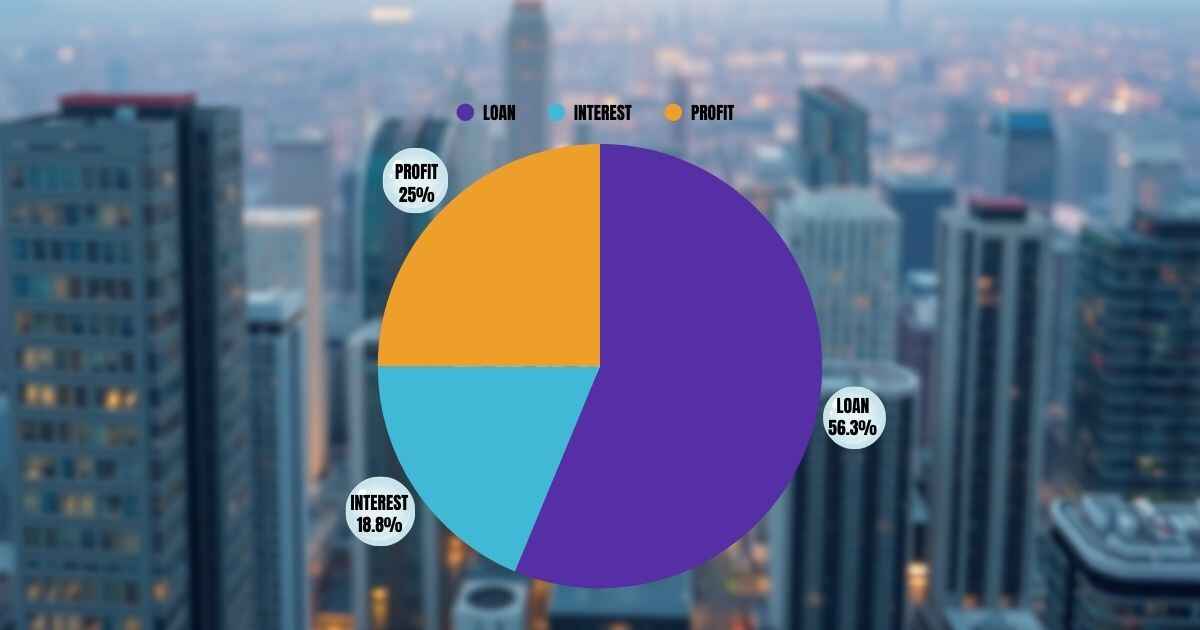
This is where the biggest challenge lies. Loan app interest rates can range between 10% and 30% per month or more. Compare that to banks that might give loans at 20% per year (though harder to access).
For a business, such high rates are like running on a treadmill—you sweat and struggle but hardly move forward. The profit made is often swallowed up by interest. The loans are no where near friendly. it is almost like they are trying to make a Naira for a Naira such as a dollar for a dollar with the loans and high interest rates.
Comparison Table: Loan Apps vs Credit Cards (Nigeria vs Abroad)
| Feature | Loan Apps | Business Loans (Banks/Microfinance) |
|---|---|---|
| Accessibility | Very easy to access through mobile apps; no collateral needed | Requires registration, collateral, guarantors, and paperwork |
| Approval Time | Instant to 24 hours | 2 weeks to 3 months |
| Loan Amount | Low (₦5,000 – ₦100,000 on average) | Higher (₦200,000 – ₦10 million depending on collateral & records) |
| Interest Rates | High (10–30% monthly) | Lower (15–25% yearly) |
| Repayment Period | Short-term (7–180 days) | Medium to long-term (6 months – 5 years) |
| Purpose | Mostly personal/emergency expenses | Business expansion, working capital, equipment purchase |
| Risk of Harassment | High – contact shaming, aggressive debt collection | Low – formal legal process for defaults |
| Suitability for Business | Not sustainable for serious businesses | More reliable for growing businesses |

How Much Cash Are Customers Eligible to Access Through Loan Apps?
Most apps start small, giving ₦5,000 to ₦20,000. With time and repayment consistency, this can grow to ₦100,000 or more.
But for real businesses—like a shop owner who needs ₦500,000 to restock—the loan app limit feels like a drop of water in the desert.
The interest rate that will follow, if one is eligible for a reasonable amount, will be so high that it will make the loan very useless for business because the borrower will end up working for the loan app since the returns from the loan will go into interest payment, and God forbid that the business doesn’t do well. The business person will be hunted down like a thief.

Loan Retrieval Process: Is It Suitable for Running a Business?
Loan apps use auto-debit systems. The moment repayment day arrives, they hit your account. For businesses that rely on customer payments, such behavior is risky.
Imagine selling goods on credit and your customers haven’t paid back yet the loan app is already withdrawing funds. It’s like owing two people at once.
Aside from the auto-debit systems. One of the conditions for eligibility for the loan is permission to access your contact list.
The consistent and disturbing calls and messages to the debtor are embarrassing and very distracting. Persistent delays would lead to calls to your contact list. The instability related to the loan retrieval process is very destabilizing.
Loan Apps and Data Privacy: Are They Stealing Customers’ Information?
Many Nigerian users complain that loan apps harass contacts and even send shameful messages when payments are delayed. This happens because these apps often collect too much personal data—phone numbers, SMS, even photos.
In advanced countries, credit cards cannot shame you publicly. But here, your entire contact list might get a message saying you are a debtor. This damages dignity and trust.
The worst thing about data collection is not the data. It is the customers who have no idea about the dangers of giving permission to apps and online platforms to collect and use their information as they deem fit without knowing the implications of the terms and conditions and privacy policy.
The general public clicks ‘yes’ or ‘accept’ to every pop-up request just to get to the end of the onboarding or final stage of the process, which could be form completion or a loan request.

Targeting the Vulnerable: How Loan Apps Exploit the Weak
Loan apps thrive because they target people in urgent need of money. Students, low-income earners, and struggling parents become easy prey.
It’s like selling umbrellas only during heavy rain—you know people are desperate, and they’ll pay any price.
Some of the access granted to the apps is used to provide targeted ads. These ads can be fashioned in such a way that the unsuspecting user will always find themselves in debt due to consistent borrowing.
Living Loan to Loan: The Risk of Addiction to the Credit Lifestyle
This is one of the scariest parts. Some people now live from loan to loan, some call it cash advance apps. You are warned no to depend on and get trapped by these apps. They borrow from one app to repay another, creating a cycle of debt.
Over time, this feels like living on life support—always connected to a machine, but never truly alive financially.
Some people now beg to borrow using friends and acquaintances app when they have run out of credibility on their one app.

Why Financial Education Matters More Than Loan Apps
In Nigeria today, many people see loan apps as a shortcut to solving money problems. But here’s the truth: without financial education, these loans can do more harm than good.
Financial education teaches you how money works—how to save, how to invest, how to budget, and how to grow capital. Loan apps, on the other hand, only give you temporary relief. If you don’t understand how to manage that money, you can end up in a deeper hole than where you started.
For example, imagine someone who borrows ₦20,000 from a loan app to restock their shop. If they don’t calculate profit margins, repayment schedules, and interest, they might use the money wrongly or sell without profit. By the time repayment is due, the debt will feel heavier than the initial problem.
In short, financial education is like learning how to fish, while loan apps are like being given one fish for a day. With education, you can build lasting wealth; with just loans, you might stay stuck in the cycle of debt.
Conclusion
Loan apps in Nigeria and Africa at large may look like credit cards, but they are far from being the same. They provide quick cash but often at a very high cost. For businesses, they are rarely sustainable due to short repayment times, high interest, and privacy risks.
The real way forward is building financial education and creating opportunities for small- and medium-scale businesses to access loans with little or no collateral. Grants are a good idea too.
Taking off the bottleneck and red tape that comes with accessing the loans and grants in Nigeria. Encouraging fair loan policies and creating systems that allow small businesses to grow without being trapped in endless cycles of debt.
Until then, loan apps will remain a temporary solution—not a long-term business partner.
You should read these:
- LOAN APPS IN NIGERIA: OUR OWN VERSION OF CREDIT CARDS – ARE THEY GOOD FOR BUSINESS OR NOT?
 Can These Loans Be Used as a Source of Funds and Capital… Read more: LOAN APPS IN NIGERIA: OUR OWN VERSION OF CREDIT CARDS – ARE THEY GOOD FOR BUSINESS OR NOT?
 - THE NAIRA FOR NAIRA MENTALITY: WHY RAISING CAPITAL FOR BUSINESS IS HARD IN NIGERIA
 Why People Expect a Naira for a Naira Why the Wealthy Think… Read more: THE NAIRA FOR NAIRA MENTALITY: WHY RAISING CAPITAL FOR BUSINESS IS HARD IN NIGERIA
 - PAYMENT ON DELIVERY VS PAYMENT BEFORE DELIVERY: WHICH ONE IS BETTER?
 What Is Payment on Delivery (POD)? Advantages of Payment on Delivery Advantage… Read more: PAYMENT ON DELIVERY VS PAYMENT BEFORE DELIVERY: WHICH ONE IS BETTER?
 - 7 Reasons Why Product Replacement is a Major Challenge for Nigerian Sellers
 Product replacement is a critical issue that many Nigerian sellers face every… Read more: 7 Reasons Why Product Replacement is a Major Challenge for Nigerian Sellers
 - THE BEST 10 WAYS YOU CAN BE A GOOD CUSTOMER
 1. Need the Product You Order 2. Know the Product You Order… Read more: THE BEST 10 WAYS YOU CAN BE A GOOD CUSTOMER
 - THE BEST 10 WAYS TO KNOW A GOOD SELLER
 1. Sells Quality Products Only 2. Provides Accurate Information About the Product… Read more: THE BEST 10 WAYS TO KNOW A GOOD SELLER
 - ALL TERRAIN MULTIPURPOSE STAIRS CLIMBING CART
 What is the Difference Between a Cart and a Trolley? Key Differences… Read more: ALL TERRAIN MULTIPURPOSE STAIRS CLIMBING CART







This is amazing
How are you?
It’s really a nice blog.